Custom pizza boxes are personalized packaging containers made specifically for pizzas, designed in specific sizes, shapes, materials, and prints to protect the pizza, retain heat, absorb moisture, and promote a brand.
Most standard pizza boxes are made from corrugated cardboard, measuring 10”, 12”, 14”, and 16” depending on pizza size (Source: Fibre Box Association, Packaging Standards).
Custom pizza boxes allow pizzerias and food brands to include logos, brand colors, promotional offers, QR codes, grease-resistant coatings, ventilation holes, and eco-friendly materials.
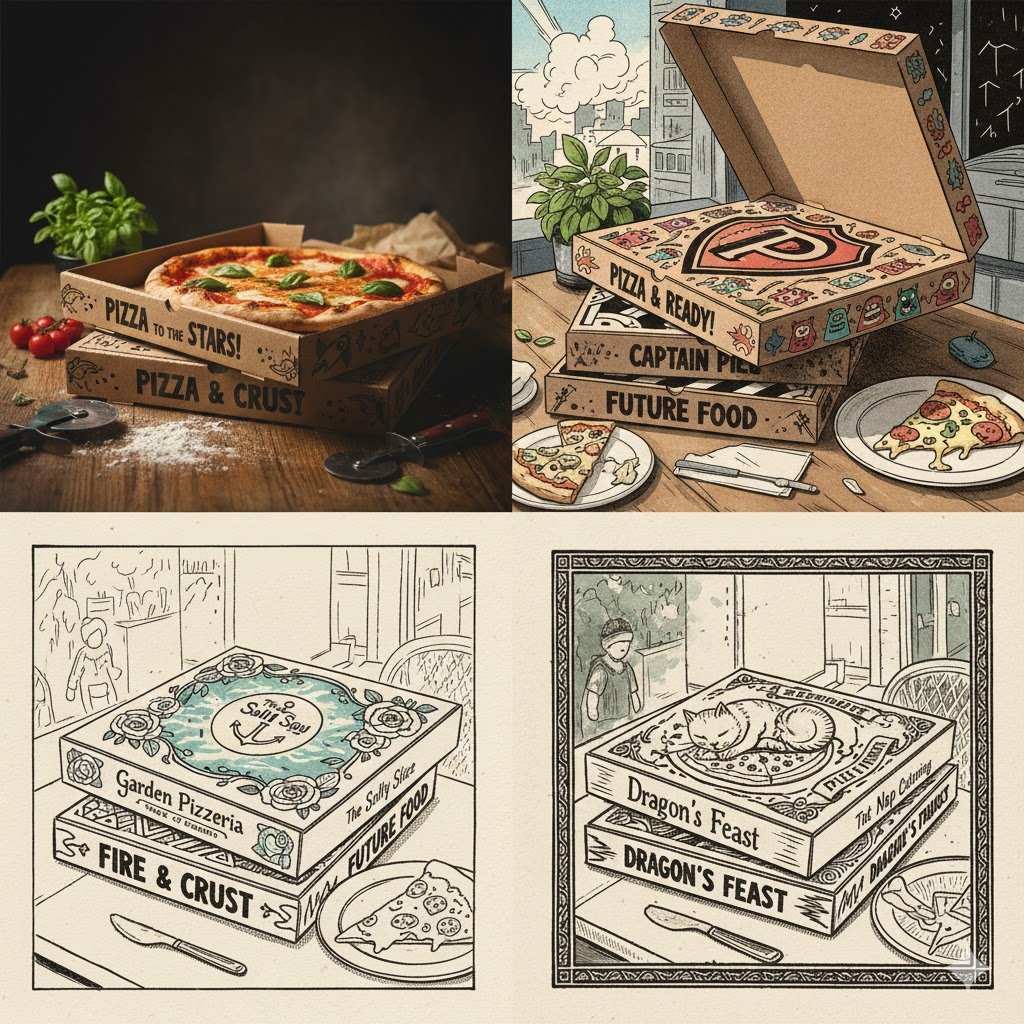
What Are Custom Pizza Boxes?
Custom pizza boxes are tailor-made packaging solutions for carrying pizzas safely while enhancing the brand’s marketing and customer experience.
Unlike generic plain boxes, these are designed according to the restaurant’s theme, pizza size, material preference, and durability requirements.
They serve three main purposes:
- Protection – keep the pizza warm, fresh, and intact
- Branding – printed logos, offers, designs for marketing
- Convenience – easy stacking, delivery handling, and disposal
Standard Pizza Box Sizes (Most Used Worldwide)
Below are the most common custom pizza box sizes used by restaurants, cloud kitchens, and franchises:
Small Pizza Boxes
| Pizza Size | Box Size (inches) | Best For |
| 8″ pizza | 8″ x 8″ x 2″ | Personal pizza |
| 9″ pizza | 9″ x 9″ x 2″ | Small serving |
Medium Pizza Boxes
| Pizza Size | Box Size (inches) | Best For |
| 10″ pizza | 10″ x 10″ x 2″ | Medium pizza |
| 12″ pizza | 12″ x 12″ x 2″ | Standard medium |
Large Pizza Boxes
| Pizza Size | Box Size (inches) | Best For |
| 14″ pizza | 14″ x 14″ x 2” | Large pizza (most popular size) |
| 16″ pizza | 16″ x 16″ x 2” | Extra-large pizza |
Extra-Large Pizza Boxes
| Pizza Size | Box Size (inches) | Best For |
| 18″ pizza | 18″ x 18″ x 2” | Jumbo pizza |
| 20″ pizza | 20″ x 20″ x 2” | XXL party pizzas |
Non-Standard / Custom-Made Sizes
Many brands request unique shapes and dimensions:
- Rectangle pizza boxes
- Square deep-dish boxes
- Slice boxes (for single slice)
- Heart-shaped pizza boxes
- Die-cut window pizza boxes
Types of Custom Pizza Boxes
To understand the full concept, below are the main types:
1. Corrugated Pizza Boxes (Most Common)
Made with fluted layers for strength and heat insulation.
Highly used by Domino’s, Papa John’s, Pizza Hut.
Pros:
- Keeps pizza hot for long
- Strong and stackable
- Eco-friendly, recyclable
Cons:
- Slightly heavier
2. Kraft Brown Pizza Boxes (Eco-Friendly Options)
Made from recycled kraft paper, brown color.
Pros:
- Sustainable
- Rustic, natural look
- Strong absorption
Best for: Organic pizza brands, artisan bakeries.
3. White Cardboard Pizza Boxes
Glossy or matte white finish.
Pros:
- Best for full-color printing
- Clean, premium look
Cons:
- Slightly higher cost
4. Custom Printed Pizza Boxes
Brands can print:
- Logos
- QR codes
- Coupons
- Social media handles
- Combo offers
- Ingredient lists
- Themed artwork
This is used heavily for marketing.
5. Ventilated Pizza Boxes
Include breathing holes to prevent sogginess.
Great for:
- Thin-crust pizzas
- Long delivery distances
- High-moisture toppings
6. Slice Pizza Boxes
Single-slice packaging for:
- Street vendors
- Cafes
- Events
- School canteens
Size (typical): 8.5” x 9.5”
7. Die-Cut / Window Boxes
Have a transparent plastic window to show the pizza inside.
Great for shops with display counters.
8. Grease-Resistant Pizza Boxes
Coated with a food-grade barrier that prevents oil stains.
Used in high-grease pizzas like:
- Cheese burst
- Deep dish
- Pepperoni
Why These Differences Exist? (Technical & Business Reasons)
Pizza boxes vary because of the following reasons:
1. Size Variations Exist Due to Pizza Styles
Different countries and brands have their own pizza sizes:
- Italy – smaller Neapolitan pizzas
- USA – large thick pizzas (14″ standard)
- Middle East & Asia – family-sized party pizzas (18–20″)
2. Material Differences for Heat & Moisture Control
- Corrugated boxes keep heat the longest
- Kraft boxes for eco-conscious brands
- Grease-proof boxes for oily pizzas
- Vent boxes to reduce sogginess
Every material has a different performance level depending on pizza style.
3. Branding Needs Create Printing Variations
Big chains invest heavily in branded boxes for:
- Recognition
- Advertising
- Customer loyalty
Small restaurants often choose kraft boxes for budget and simplicity.
4. Delivery vs. Dine-In Requirements
Delivery requires:
- Strong corrugated boxes
- Heat retention
- Stability
Dine-in or takeaway often requires:
- Display boxes
- Window boxes
- Single-slice boxes
Additional Relevant Details (Complete Deep Information)
Below are advanced details that help understand custom pizza boxes better:
Food Safety Standards
Pizza boxes must follow:
- FDA food-contact regulations
- EU Food Packaging Directives
- Use water-based inks for printing
- Avoid bleach or chemical coatings
Thickness / Flute Types
Corrugated sheets have different flutes:
| Flute Type | Thickness | Best For |
| E-flute | 1.2–1.5mm | Small pizzas |
| B-flute | 2.5–3mm | Medium/large |
| C-flute | 3.5–4mm | Heavy pizzas |
Custom Printing Options
- Single-color printing (black) – cheap
- Full CMYK printing – premium
- UV-coated finish
- Matte laminated
- Embossed logos
Branding Elements to Add on Pizza Boxes
- Brand story or tagline
- “Scan to order” QR code
- Social media icons
- Green recyclable icon
- Ingredients list
- Promotional offers
Comparisons for Context (Easy to Understand)
Below are comparisons to help visualize custom pizza boxes:
Pizza Box vs. Burger Box
| Feature | Pizza Box | Burger Box |
| Size | Larger, flat | Small, deep |
| Heat Retention | Higher | Moderate |
| Branding Space | Large | Limited |
| Material | Corrugated | Cardboard/Kraft |
Corrugated Box vs. Kraft Box
- Corrugated = strong + heat control
- Kraft = eco-friendly + rustic
Standard Pizza Box vs. Custom Pizza Box
- Standard: plain brown, no branding
- Custom: personalized, printed, promotional
Why Custom Pizza Boxes Matter
Custom pizza boxes have a huge impact across multiple areas:
1. Branding & Marketing
A pizza box acts like a moving billboard.
Every delivery spreads the brand to several people.
2. Customer Experience
A high-quality box ensures:
- Pizza stays hot
- Crust stays crisp
- No collapse during delivery
3. Environmental Impact
Eco-friendly boxes reduce waste and pollution.
4. Business Growth
Custom boxes increase:
- Repeat orders
- Brand loyalty
- Social media engagement (unboxing photos)
Quick Facts Table
| Category | Key Information |
| Core Definition | Personalized pizza packaging for branding + protection |
| Common Sizes | 8″, 10″, 12″, 14″, 16″, 18″, 20″ |
| Materials | Corrugated, Kraft, Cardboard |
| Thickness | E-flute, B-flute, C-flute |
| Printing Options | 1-color, CMYK, UV, matte |
| Special Features | Vent holes, grease-proof, die-cut windows |
| Purpose | Delivery, takeaway, branding |
Conclusion
Custom pizza boxes play a crucial role in maintaining food quality, enhancing brand identity, and driving business success. From size and material selection to printing and coating options, every element adds value to the customer experience. They are more than packaging—they are an extension of your brand and a powerful marketing tool.
FAQs / People Also Ask
1. What material is best for custom pizza boxes?
Corrugated cardboard is the best because it provides heat retention, strength, and durability.
2. Are pizza boxes safe for food contact?
Yes, pizza boxes use food-grade materials and water-based inks to meet FDA or EU safety standards.
3. Can I get custom-printed pizza boxes in small quantities?
Yes, many suppliers offer low minimum orders, even starting from 50–100 boxes.
4. What is the standard thickness of pizza boxes?
Between 1.2 mm and 4 mm, depending on flute type (E, B, or C).
5. Are pizza boxes recyclable?
Yes, clean parts are recyclable. Greasy portions should be composted.
6. Can pizza boxes keep pizza hot?
Yes corrugated boxes trap air and keep pizzas warm up to 45–60 minutes