Dementia is a growing global concern affecting millions of people and their families. One of the most worrying challenges caregivers face is wandering behavior. People living with dementia can become disoriented and leave familiar places without realizing the danger. This is where a Reunite Tag for dementia becomes a powerful and life-saving tool.
A Reunite tag is a small identification device worn by individuals with dementia that helps authorities and the public quickly reconnect them with their caregivers if they become lost. In this article, we will explore how Reunite tags work, their benefits, and why they are becoming an essential part of dementia care.
Understanding Dementia and Wandering Behavior
Dementia is a neurological condition that affects memory, thinking, and decision-making abilities. As the disease progresses, individuals may struggle to recognize familiar environments or remember where they live.
One common symptom is wandering, where a person may walk away from home or a care facility without realizing it. According to dementia research organizations, a large percentage of individuals with dementia will wander at least once during their illness.
Wandering can occur because of:
- Confusion about time or place
- Searching for a familiar person or memory
- Anxiety or restlessness
- Attempting to continue past routines such as going to work
When someone with dementia becomes lost, it can quickly turn into a dangerous situation, especially if they cannot communicate their identity or address.
This is why identification solutions like Reunite tags for dementia patients are becoming increasingly important.
What Is a Reunite Tag for Dementia?
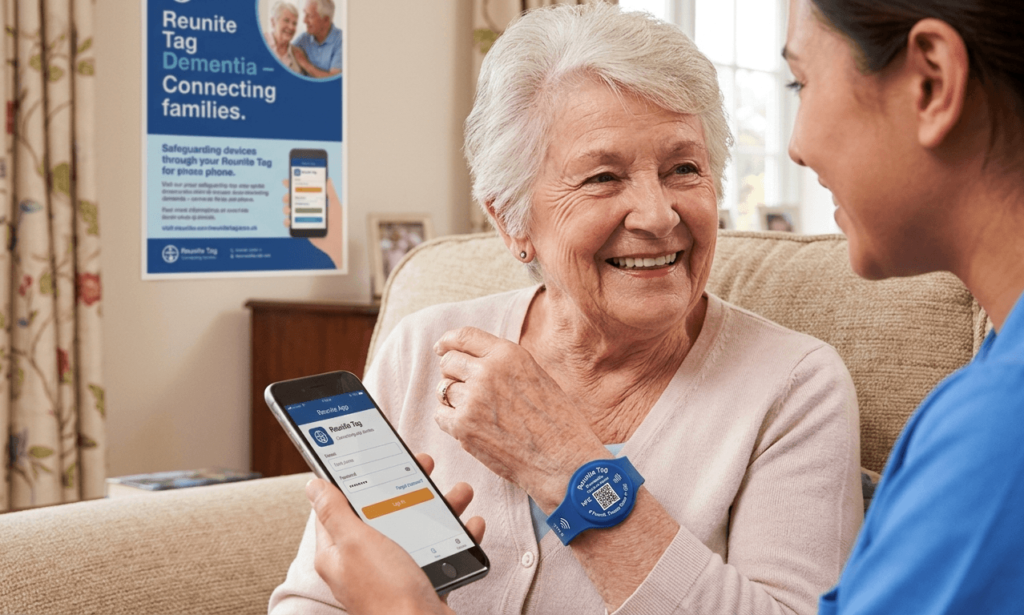
A Reunite Tag is a wearable identification tag designed to help quickly reconnect lost individuals with their caregivers or family members.
The tag usually includes:
- A unique identification number
- A 24/7 helpline contact
- A secure database containing caregiver details
Instead of displaying personal information directly on the tag, the system uses a registration number linked to a database. When someone finds the individual wearing the tag, they can call the helpline or enter the number online to contact the caregiver.
This method protects privacy while ensuring a fast and reliable reunification process.
Reunite tags are commonly worn as:
- Wristbands
- Shoe tags
- Keychain tags
- Neck pendants
Their small size and durability make them ideal for everyday wear.
How Reunite Tags Help Locate Missing Dementia Patients
The main purpose of a Reunite tag dementia solution is to help locate individuals quickly when they wander.
Here is how the system typically works:
- Registration: Caregivers register the individual and provide emergency contact information.
- Unique ID assignment: The person receives a tag with a unique identification number.
- Discovery: If the person becomes lost, anyone who finds them can check the tag.
- Helpline contact: The finder calls the helpline or enters the tag number online.
- Caregiver notification: The system alerts the registered caregiver immediately.
Because the service operates 24 hours a day, help is available anytime, even during nights or weekends.
This quick identification process significantly reduces search time and stress for families.
Key Benefits of Using a Reunite Tag for Dementia Patients
A Reunite tag offers several important advantages for both caregivers and people living with dementia.
1. Faster Identification: If a person becomes lost, the tag allows authorities or members of the public to identify them quickly.
2. Increased Safety: Knowing that your loved one carries identification can reduce the risks associated with wandering.
3. Privacy Protection: Unlike traditional medical ID tags, Reunite tags do not show personal information publicly.
4. 24/7 Support: The system provides round-the-clock assistance through emergency helplines.
5. Peace of Mind for Families: Caregivers gain reassurance knowing there is a reliable system in place if their loved one becomes disoriented.
These benefits make Reunite tags a valuable safety tool in dementia care.
Types of Reunite Tags Available for Dementia
Different types of Reunite tags for dementia patients are available to suit various preferences and lifestyles.
- Wristband Tags: These are similar to medical alert bracelets and are comfortable for everyday wear.
- Shoe Tags: Attached securely to shoelaces, shoe tags are ideal for individuals who may remove wristbands.
- Necklace or Pendant Tags: These tags are worn around the neck and are easy for responders to notice.
- Keychain Tags: Useful for individuals who still carry personal items like keys or small bags.
Choosing the right type depends on the individual’s comfort, habits, and likelihood of removing accessories.
Why Caregivers Should Consider a Reunite Tag
Caring for someone with dementia involves many responsibilities, and preventing wandering incidents is one of the most challenging.
A Reunite tag dementia system acts as an additional layer of protection.
Caregivers often worry about situations such as:
- The person leaving the house unnoticed
- Getting lost during a walk
- Forgetting their home address
- Being unable to communicate personal details
Even with supervision, accidents can happen. A Reunite tag ensures that if the unexpected occurs, help is readily available.
Many caregivers report that having identification tools like Reunite tags reduces anxiety and improves confidence in daily care routines.
Additional Safety Strategies for Dementia Wandering
While Reunite tags are extremely helpful, they should be part of a broader dementia safety plan.
Other strategies include:
Home Safety Measures
- Install door alarms
- Use motion sensors
- Secure exits during nighttime
Routine and Structure: Maintaining consistent daily routines can reduce confusion and restlessness.
GPS Tracking Devices: Some families also use GPS trackers to monitor real-time location.
Community Awareness: Inform neighbors and local authorities about the situation so they can assist if the person wanders.
Combining these approaches with a Reunite tag identification system provides stronger protection.
How to Register for a Reunite Tag
Registering for a Reunite tag is typically a simple process.
Most programs follow these steps:
- Create an account online or through an organization
- Provide caregiver contact information
- Add medical or support details if necessary
- Receive the tag with a unique identification number
- Attach or wear the tag daily
It is important to keep contact details updated so that the system works effectively during emergencies.
Regularly checking that the tag is still worn and visible can also help ensure it remains useful.
The Growing Importance of Reunite Tags in Dementia Care
As the global population ages, the number of people living with dementia continues to rise. Families, healthcare providers, and communities are searching for better ways to protect vulnerable individuals while maintaining independence.
Reunite tags represent a simple yet powerful solution. By providing fast identification and direct caregiver contact, they dramatically improve the chances of safely returning a lost individual.
For caregivers, this technology offers something invaluable: peace of mind.
Conclusion
Dementia presents many challenges, and wandering is one of the most concerning. However, tools like the Reunite tag for dementia patients can make a significant difference in ensuring safety.
These small identification tags connect individuals to a 24/7 support system, allowing caregivers, authorities, and community members to quickly reunite families if someone becomes lost.
While no single solution can eliminate all risks, combining Reunite tags with other safety strategies provides a strong and reliable approach to dementia care.
For families caring for someone with dementia, a Reunite tag may be a small device—but it can deliver lifesaving protection and priceless peace of mind.