Cross Drawing: A Practical Guide From Sketch to Print
Christmas Drawings: Art, Ideas, Printing, and Modern Creative Tools
Arslan Khokhar
September 16, 2026
Christmas drawings bring familiar holiday stories to life through pencil, ink, paint, digital illustration and printed products. A simple picture of Santa Claus, a decorated Christmas tree, or a snowy house can become a greeting card, classroom activity, wall print, gift tag or commercial package. The subject may look easy, yet good holiday artwork depends on composition, color, materials, audience and the final printing method.
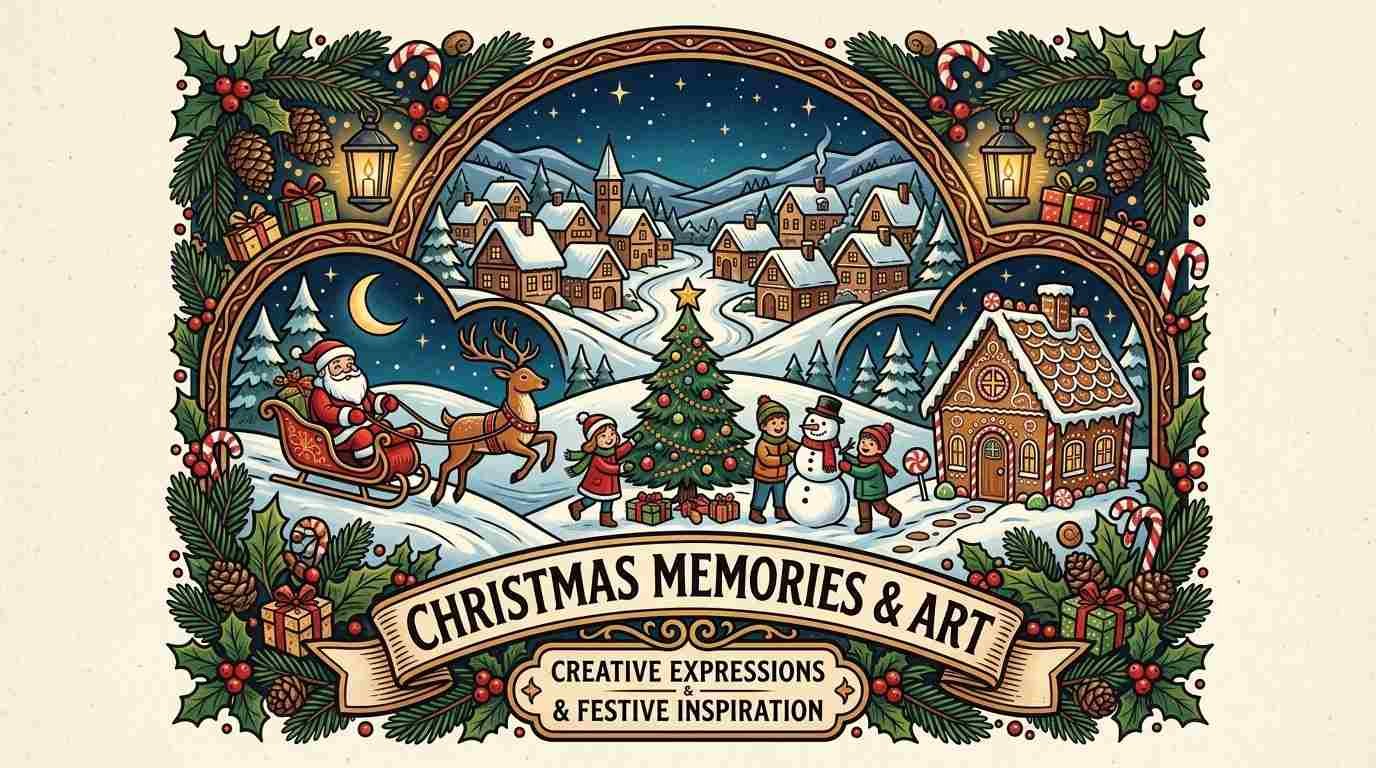
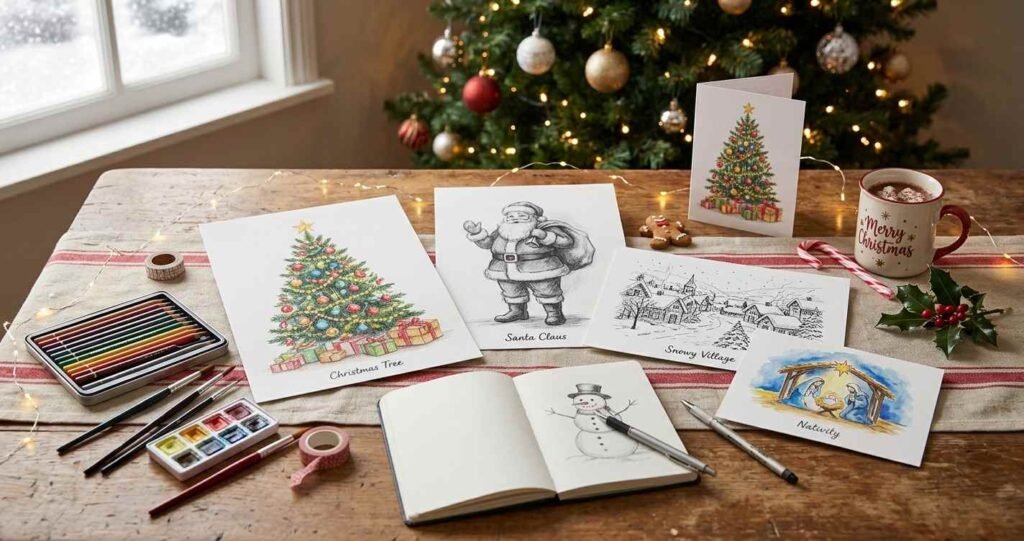
Artists have drawn Christmas scenes for centuries. Religious images often show the Nativity, angels and the Star of Bethlehem. Secular artwork includes reindeer, snowmen, ornaments, candy canes, stockings, gingerbread houses and winter villages. These subjects remain very popular since people connect them with family traditions and seasonal memories.
Popular Subjects for Christmas Drawings
Santa Claus and Holiday Characters
Santa Claus is one of the most recognized Christmas characters. His red suit, white beard, round face and gift sack give artists many visual details to work with. Younger children often draw him with basic circles and curved lines. Experienced illustrators may study facial expressions, fabric folds and body movement to make the character feel more alive.
Reindeer, elves and snowmen can support the main scene. Rudolph usually receives a bright red nose, though the rest of his body can be drawn from real deer anatomy. An elf might carry toys or wrap presents. Snowmen allow broad creative freedom since no two need look the same.
Christmas Trees and Ornaments
A Christmas tree can be built from stacked triangle shapes or drawn with natural branches. The simple method works well for coloring pages, stickers and beginner lessons. A realistic tree requires more attention to branch direction, needle texture, shadow and the way ornaments sit between the greenery.
Decorations provide small areas for detail. Artists can include baubles, ribbons, lights, bells and a star. Too many decorations may make it hard to read, especially after the drawing is reduced for a gift tag. A clear arrangement usually print better.
Winter Scenes and Cozy Homes
Snow covered cabins, village streets and frozen lakes create a strong seasonal mood. These scenes often use depth, with larger objects in front and smaller objects farther away. Pale blue shadows help white snow remain visible instead of appearing like empty paper.
Warm yellow windows can contrast with a cold blue sky. Smoke rising from a chimney adds movement. It is a small detail, but it make the house feel occupied and safe. You can add footsteps, pine trees, fences or a distant church without filling every open area.
Religious Christmas Art
Nativity drawings focus on Mary, Joseph and the infant Jesus. Shepherds, wise men, animals and angels may be included. Artists should study the purpose and audience before selecting a style. A church bulletin may need respectful traditional art, while a children’s lesson sheet can use softer shapes and friendly expressions.
Historical references can help with clothing, architecture and objects. Many familiar Nativity pictures reflect later European art more than first century Judea. An artist can choose historical accuracy or established visual tradition, but the choice should be made with care.
Drawing Materials and Methods
Pencil, Ink and Colored Pencil
Graphite pencil is useful for early planning since lines can be adjusted. A harder pencil creates pale construction marks, and a softer pencil creates rich shadows. Too much graphite may smear during scanning, so the page should be handled gently.
Ink gives a bold result that reproduces well in books and activity sheets. Waterproof ink is useful when watercolor will be added. Colored pencils create controlled layers and are good for small artwork, though heavy pressure can flatten the paper surface and cause shiny areas in a scan.
Markers, Watercolor and Acrylic Paint
Markers produce saturated color with very edges, which suits cartoons and poster art. Test the marker on a spare sheet because it might bleed through paper. Watercolor gives snow, sky and glowing lights a loose appearance. Leaving parts of the paper unpainted can represent the brightest snow.
Acrylic paint works well on canvas, wood ornaments and thick paper. It dries fast and accepts added layers. Some artist use white acrylic for snow after the darker background has dried.
Digital Christmas Illustration
Digital drawing software such as Adobe Photoshop, Adobe Illustrator, Procreate, CorelDRAW and Clip Studio Paint lets an artist work in layers. Separate layers for sketch, line art, color and text make revisions easier. Vector programs suit logos, ornaments and scalable graphics. Raster programs suit painted scenes and textured artwork.
One common mistake is drawing at a low resolution. Artwork intended for print should normally be prepared at 300 pixels per inch at its final size. Large format signs may use a different resolution based on viewing distance. Color settings matter too. Screens display RGB color, and many commercial presses reproduce with CMYK inks, so a bright screen color may got duller on paper.
A Practical Drawing Process
A reliable Christmas drawing can be developed through these stages:
- Select one main subject and decide who will view it.
- Make several tiny composition sketches before starting the full drawing.
- Place the largest shapes and leave room for text if the art is for a card or poster.
- Refine faces, hands, ornaments and other important details.
- Add color with a limited seasonal palette.
- Scan or photograph traditional artwork using even light.
- Prepare the file for its intended print size and request a proof.
Red and green remain common, but they are not the only choices. Blue and silver can create an icy feeling. Cream, brown and muted red fit a rustic style. Pink, turquoise and gold can suit modern stationery. Using four or five main colors keeps the picture connected, and then small accents can be added.
Composition, Light and Visual Storytelling
A drawing needs a clear focal point. This may be Santa’s face, the glowing tree, a child opening a gift or the infant in a Nativity scene. Size, placement, color contrast and surrounding space guide the viewer’s eyes.
Light tells part of the story. Christmas scenes often contain candles, fireplaces, stars and string lights. An artist should decide where the light comes from before shading objects. If a fireplace is the main source, nearby faces and furniture may receive orange light. Moonlight outside can be cooler. Mixing several sources is possible, but this sometimes gets confusing for new artist.
Small actions make an image feel less generic. A crooked ornament, a dog sleeping near the tree, or one mitten left in the snow suggests that something has happened. It gives the viewer a little story without using words.
Preparing Christmas Drawings for Printing
Resolution, Size and File Formats
The intended product controls the file setup. A greeting card, wrapping paper and outdoor banner have different requirements. Printers commonly accept PDF, TIFF, PNG or JPEG files. Vector files may be requested for logos and die cut products.
Artwork that reaches the edge of a printed piece needs bleed. This extra image area extends past the trim line so tiny cutting shifts do not leave a white border. Safe margins keep text and faces away from the edge. The print provider should supply exact measurements, since production equipment and product types varies.
Paper and Finishing Choices
Uncoated paper has a soft surface and works nicely for hand drawn styles. Coated stock can reproduce rich color and fine detail. Textured paper gives warmth, but a deep texture may weaken thin lines.
Common finishes include matte coating, gloss coating, foil stamping, embossing and spot varnish. Metallic foil can suit stars and ornaments, yet too much foil can compete with the illustration. Glitter may look festive, though it raises cost and can complicate recycling.
Proofing and Color Control
A physical proof is the safest way to judge color, scale and text readability. Computer monitors differ, and paper absorbs ink in its own way. A red that looks cheerful on screen could print too dark. Printers use color profiles, calibrated devices and press checks to manage this difference.
Home printers need attention as well. Use the correct paper setting, allow ink to dry and print one sample before producing twenty cards. People sometimes skip the sample and then gets a whole stack with clipped borders.
Artificial Intelligence and Scientific Research
Artificial intelligence is becoming part of visual research, image creation and print production. Scientists use machine learning to study patterns in large image collections, measure human visual responses and test how people recognize shapes or colors. Findings from computer vision and cognitive science can help explain why familiar forms, strong contrast and simple silhouettes are read so quickly.
AI image systems can generate reference ideas for Christmas compositions. They may suggest a snowy village, ornament arrangement or color scheme. The artist still needs to review anatomy, cultural details, lighting and originality. Generated images can contain strange hands, repeated decorations, unreadable lettering or objects that do not make sense.
Scientific research supports better scanning and printing too. Image processing can reduce noise, restore faded artwork and enlarge an image with fewer visible artifacts. Color science helps printers compare screen color with ink on paper. Automated inspection systems can find registration shifts, missing ink and surface defects during production.
Copyright and data ethics remain serious concerns. An artist should check commercial usage terms, avoid copying a living artist’s recognizable style and keep records of original sketches. AI can be a useful assistant, but human judgment remain responsible for the final artwork.
Uses Across the Creative and Printing Industry
Christmas drawings support many products and services:
- Greeting cards, postcards and invitations
- Gift wrap, tags, labels and shopping bags
- Children’s books, worksheets and coloring pages
- Apparel, mugs, ornaments and home decorations
- Retail displays, catalogs and social media promotions
- Food packaging for cookies, candy, coffee and seasonal gifts
Illustrators work with graphic designers, art directors, print technicians, publishers, packaging companies and marketing teams. Licensing agencies may represent artwork for use across several products. Print on demand services let independent artists sell designs without storing inventory, though profit margins and image quality can differ a lot.
Common Questions About Christmas Drawings
What is the easiest Christmas subject to draw?
A tree, ornament, snowman or wrapped gift is a good starting point. These subjects use basic geometric shapes and can still look personal through color and small details.
Which paper is best for Christmas artwork?
Smooth drawing paper suits pencil and ink. Watercolor paper suits wet paint. Bristol board works well for markers and detailed line work. The paper should match the medium rather than just the holiday theme.
Can a hand drawing be printed on greeting cards?
Yes. Scan it at high resolution, adjust the background and color, then place it in a card layout. Ask the printer about bleed, safe margins, color mode and accepted file formats.
Can AI generated Christmas pictures be sold?
Sometimes, but the answer depends on the tool license, local copyright rules and how the image was produced. Commercial sellers should review current terms and document their own creative contribution.
How can Christmas drawings look original?
Use personal memories, local architecture, family traditions or an unusual viewpoint. A familiar tree can feel new when seen through a frosted window or reflected in an ornament. Originality often comes from specific observation, not from adding more decoration.
Christmas drawings remain useful because they can carry warmth, humor, faith and memory in one visual form. Strong planning helps the artwork succeed on paper, screens, packages and gifts. Traditional materials and modern AI tools give artists many options, but a clear idea and thoughtful human choices still makes the biggest difference.
Share It
Previous Post
Next Post
Recent Posts