Drones are changing the way people work, farm, film, and explore. But to keep them flying safely, we need smart landing and charging solutions. A drone landing pad and drone charging pad are simple tools that can protect your drone and make every flight smoother.
Whether you fly a small DJI Mavic, a commercial drone, or an RC hobby drone, the right landing pad and charging setup help you launch safely, land accurately, and charge efficiently. Let’s explore how these pads work and why they are a must for every drone pilot.
What Is a Drone Landing Pad and Why Do You Need One?
Why Use a Drone Landing Pad?
If you’ve ever taken off from grass, dirt, or gravel, you already know why a drone landing pad is useful. When a drone’s propellers spin, they create strong downward air currents that stir up dust and debris. This can damage sensors or enter the motors.
A landing pad gives your drone a clean, flat area to take off and land. It keeps mud, grass, and sand from hitting your camera lens or gimbal. It also helps prevent small stones from being sucked into the propellers.
A good landing pad also helps with GPS calibration. When you launch from a marked pad, your drone’s sensors can recognize the takeoff spot more easily, improving return-to-home accuracy.
How Landing Pads Improve GPS and Stability
Modern drones rely heavily on GPS signals and computer vision. A stable, brightly colored pad provides a clear target for precision landing systems.
Some pilots even use GPS phone pads or apps that connect to drone technology to mark the takeoff zone digitally. This combination helps drones land in the exact same spot — a big advantage in tight or rough environments.
Types of Drone Landing Pads
Standard Portable Landing Pads
The most common option is a folding drone landing pad. These are lightweight, made from nylon or waterproof fabric, and easy to carry. Most come with stakes to hold them steady on windy days.
If you’re looking for a simple landing pad for drones, portable versions are perfect for travel or quick flights in open areas. They fold down small, usually into a round pouch, and open up in seconds.
Professional Pads by Brand
Brands like Hoodman and PGYTECH make professional-grade landing pads.
- The Hoodman Drone Landing Pad and Hoodman Drone Launch Pad are known for their heavy-duty materials and high visibility. They stay flat and resist folding in the wind.
- The PGYTECH Drone Landing Pad is lighter and great for DJI pilots. It’s reversible (orange/blue) and has reflective stripes for visibility during low-light conditions.
Drone Landing Pads for DJI Models
DJI offers several branded options for models like the DJI Mavic Pro or DJI Air series. These pads are often magnetic or have alignment markings that help drones recognize them for automated landings.
A DJI Drone Landing Pad helps new pilots by giving visual and color contrast cues, reducing the risk of tipping or bouncing during landing.
RC Drone Landing Pads
For hobbyists flying RC drones, smaller pads work well. These RC drone landing pads are made of foam or plastic and protect your craft from dirt and scratches. Even if your drone doesn’t have GPS, a pad gives you a safe, predictable landing zone.
Custom and Large-Scale Drone Landing Pads
Custom Drone Landing Pads for Branding and Industrial Use
Commercial drone operators often use custom drone landing pads printed with logos or reflective markers. This helps with visibility and branding at events or work sites.
Industrial users, like survey teams or agricultural companies, sometimes need custom drone landing pads with built-in power or sensors to sync with tracking software.
Large and Extra-Large Drone Landing Pads
Heavy-lift and agricultural drones need large drone landing pads or even extra-large landing pads for safe operation. These pads support wider gear and heavier takeoffs.
Many large drone landing pads for sale are made of durable rubber or composite materials that can handle high winds and chemicals from crop spraying.
Drone Landing Pad with Lights and LED Markers
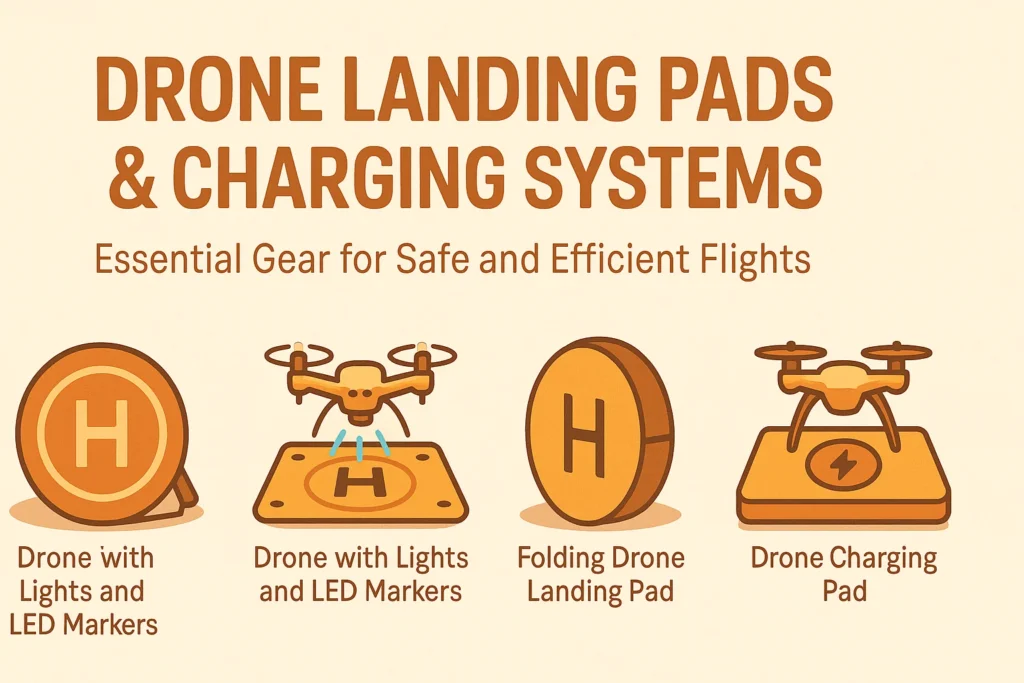
A drone landing pad with LED lights is great for night flying or low-visibility work. Lighted drone landing pads use built-in LEDs or reflective strips to guide drones during automatic descent.
If you often fly after sunset, a drone landing pad with lights ensures your drone lands safely, even when human vision struggles to track it
Folding, DIY, and Portable Drone Pads
Folding Drone Landing Pad, How to Fold and Store It
A folding drone landing pad is easy to use once you learn the trick. To fold one:
- Hold the pad on both sides.
- Twist your wrists in opposite directions.
- The pad will collapse into three loops.
- Slide it into the storage bag.
If you’re wondering how to fold a drone landing pad, most come with diagrams. Folding saves space and protects the surface from bending.
DIY Drone Landing Pad Ideas
A DIY drone landing pad can be made from many materials — rubber mats, vinyl banners, or old floor tiles. Spray-paint a large “H” or target circle in the middle to help your drone camera lock on.
A DIY drone launch pad is a good option for beginners who want to save money. Just make sure the surface is flat and non-reflective to avoid confusing optical sensors.
Choosing Between DIY and Branded Options
DIY pads are cheap and easy to replace, but branded ones last longer and fold compactly. Professional pads also have non-slip bottoms, which help in rough weather.
If you often fly in public or commercial areas, a branded pad gives a more professional look and provides better protection for high-value drones.
Drone Charging Pads, The Future of Autonomous Flight
What Is a Drone Charging Pad?
A drone charging pad is like a docking station for your drone. After landing, the drone connects directly to a power source through contact points or a wireless charging coil.
Some include a drone battery pad that aligns with the drone’s landing gear. These pads automatically start charging when the drone lands, saving time and human effort.
Wireless Drone Charging Pads and Their Benefits
A wireless drone charging pad uses magnetic induction — similar to how smartphones charge without cables. This is ideal for autonomous drones that perform repeated missions, such as mapping or delivery.
Wireless systems reduce wear on connectors and allow continuous operation, especially in fleets where drones return home frequently.
Drone Charging Pad Price and Cost Comparison
Prices vary depending on size and features:
- Basic charging pads: $100–$300
- Wireless or solar versions: $500–$2,000
- Industrial charging stations: $3,000+
If you want to know the drone charging pad price before buying, compare materials, weatherproof ratings, and compatibility. Commercial users should look for safety certifications and smart-charging control boards.
Drone Battery Protection and Anti-Vibration Pads
To extend battery life, use a drone battery anti-vibration pad or soft-mounted pad. These help protect batteries from shock when landing. Vibration pads are especially helpful for heavy drones or rough terrain, reducing internal stress on cells and circuits.
Top Brands and Models to Consider
DJI-Compatible Landing Pads
DJI makes several high-quality pads that match its popular drones. A DJI drone landing pad is built for portability and integrates perfectly with DJI’s vision system. It’s weather-resistant and color-coded for accurate sensor detection.
Many pilots prefer the drone landing pad DJI series because of its folding design and durable materials.
Hoodman and PGYTECH Options Compared
Hoodman Drone Landing Pads are known for strength and visibility. They use heavy materials that stay put in the wind, ideal for large or commercial drones.
PGYTECH Drone Landing Pads are lightweight and travel-friendly. They fold easily and come in bright orange and blue colors.
Both are reliable, but Hoodman suits professionals who need durability, while PGYTECH is perfect for travelers and photographers.
Best Drone Landing Pads for Commercial and Agricultural Drones
For large drones used in farming or inspection, heavy-duty pads made of PVC or rubber are best. They resist chemicals and moisture.
Agricultural drones benefit from extra-large landing pads that can handle muddy conditions and higher thrust levels. Look for UV-resistant coatings if your work involves long hours in sunlight.
Buying Guide — What to Look for in a Drone Landing Pad
When choosing the right pad, consider these factors:
- Material (Nylon vs. Rubberized):
Nylon pads are light and cheap but may blow away in wind. Rubberized or PVC pads are heavier and more stable. - Portability and Folding Mechanism:
A folding design helps with storage and quick setup. Always check how easy it is to fold and unfold. - Weight and Anti-Slip Design:
Heavier pads resist shifting in wind. Non-slip bottoms prevent sliding on smooth surfaces. - Visibility (Color Contrast and Lighting):
Bright orange, yellow, or blue pads stand out on the ground and help the drone’s camera recognize the landing zone. - Compatibility with Drone Sizes:
Match your drone’s diagonal size to the pad’s diameter. Small pads for mini drones, large pads for agricultural or commercial drones.
Final Thoughts
As drones continue to evolve, accessories like landing pads and charging systems play a key role in keeping flights safe and efficient. These simple tools protect your investment, extend battery life, and support precise takeoffs and landings.
Whether you’re flying a DJI, RC, or commercial drone, using a high-quality pad shows professionalism and care for your gear. With wireless charging pads on the rise, future drones may never need a plug again, just land and recharge automatically.
Explore the latest in customizable drone landing pads and smart charging solutions to make every mission smoother, safer, and smarter.
Frequently Asked Questions (FAQ Section)
Q1: Why use a drone landing pad?
A landing pad protects your drone from dirt, debris, and uneven ground. It improves safety, stability, and precision during takeoff and landing.
Q2: Do I need a drone landing pad for my DJI or Mavic drone?
Yes. Even small drones like the DJI Mavic benefit from a landing pad. It keeps the sensors clean and ensures accurate landings.
Q3: How do I fold a drone landing pad?
Hold it with both hands, twist your wrists in opposite directions, and fold it into three loops. Most pads come with a pouch for storage.
Q4: What’s the difference between a landing pad and a charging pad?
A landing pad provides a safe surface for takeoff and landing. A charging pad recharges your drone automatically or through contact points after landing.
Q5: How much does a drone charging pad cost?
Basic models start around $100, while wireless or solar-powered options can cost several thousand dollars for industrial setups.
Q6: Can I make a DIY drone landing pad at home?
Absolutely! Use a rubber mat or vinyl sheet, paint a visible target in the center, and make sure it’s flat and clean.
Q7: Are lighted landing pads better for night operations?
Yes. Lighted drone landing pads with LEDs or reflective tape make it easier to land safely at night or in low light.