As the world continues to search for sustainable and locally sourced energy solutions, innovative ideas are emerging from agricultural communities. One such promising concept is the Oil Palm Lamp Project — a street lighting system powered by oil palm–derived biofuel. This project merges renewable energy, rural development, and sustainable infrastructure into a single practical solution, particularly suited for regions where oil palm cultivation is abundant.
In this blog, we will explore the concept, technology, benefits, implementation process, challenges, and future potential of oil palm–powered street lamps.
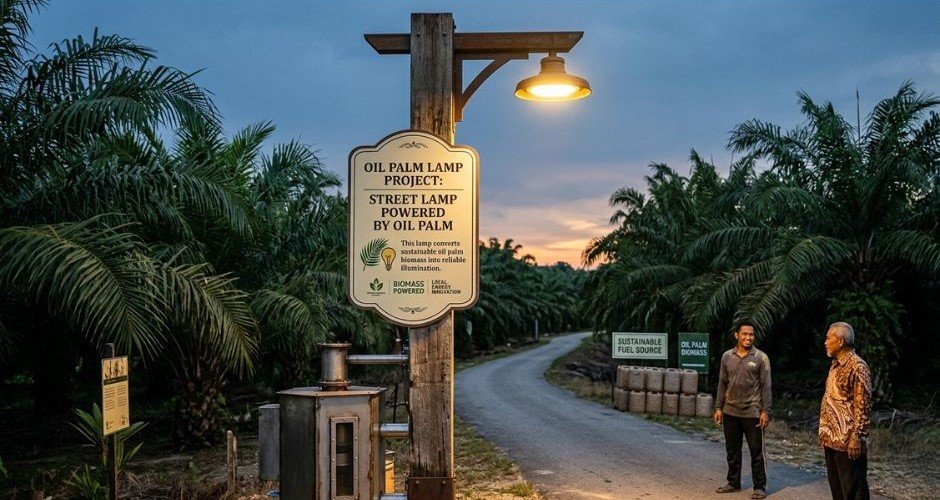
1. Introduction to the Oil Palm Lamp Project
The Oil Palm Lamp Project focuses on using oil derived from palm fruits as a renewable energy source to power street lamps. Oil palm is widely cultivated in tropical regions such as Southeast Asia, Africa, and parts of South America. Traditionally, palm oil is used for cooking, cosmetics, processed foods, and biofuel production.
The innovative idea behind this project is simple:
- Convert palm oil into biofuel.
- Use the biofuel to generate electricity or power specialized oil lamps.
- Install these systems as street lighting solutions in rural and semi-urban areas.
This approach is particularly valuable in remote communities where grid electricity is unreliable, expensive, or unavailable.
2. Why Oil Palm as an Energy Source?
2.1 Abundance in Tropical Regions
Countries that produce large quantities of palm oil often face energy shortages in rural regions. Instead of transporting fossil fuels from distant areas, communities can use locally produced palm oil as an alternative energy source.
2.2 Renewable and Sustainable
Oil palm trees produce fruit year-round. Unlike fossil fuels, which are finite and environmentally harmful, palm oil can be harvested sustainably when managed properly.
2.3 High Energy Yield
Oil palm is one of the most efficient oil crops in the world. It produces more oil per hectare than soybean, sunflower, or rapeseed. This makes it an efficient raw material for biofuel production.
2.4 Supporting Local Economies
By using palm oil for local energy projects, communities create additional income streams for farmers and reduce dependence on imported fuel.
3. How the Oil Palm Street Lamp Works
There are generally two technological approaches to implementing an oil palm street lamp system:
3.1 Direct Oil Combustion Lamp
This is the simpler model. It works similarly to traditional oil lamps:
- Palm oil is filtered and purified.
- The oil is placed in a reservoir.
- A controlled wick or burner system provides steady light.
- A protective glass or metal housing shields the flame from wind and rain.
This system is suitable for low-cost rural installations but may produce smoke if not properly refined.
3.2 Biofuel Generator-Based System
A more advanced system converts palm oil into biodiesel:
- Palm oil undergoes transesterification to produce biodiesel.
- Biodiesel fuels a small generator.
- The generator produces electricity.
- Electricity powers LED street lights.
This approach offers:
- Brighter lighting
- Lower emissions
- Greater efficiency
- Longer operational lifespan
LED integration significantly reduces energy consumption while improving illumination quality.
4. Components of an Oil Palm Street Lamp System
A complete oil palm–powered street lamp system typically includes:
- Oil Storage Tank: Stores processed palm oil or biodiesel.
- Fuel Pump System: Transfers fuel to burner or generator.
- Burner or Generator Engine: Converts fuel into light or electricity.
- LED Lighting Unit: Energy-efficient lighting system.
- Pole and Housing: Weather-resistant structure.
- Control System: Timers or sensors for automatic on/off functionality.
- Safety Mechanisms: Fire protection and pressure control systems.
In modern designs, solar hybrid systems may also be incorporated to create dual-energy street lamps.
5. Environmental Benefits
· Reduced Fossil Fuel Dependence: By replacing diesel-based generators with palm oil biodiesel, communities reduce greenhouse gas emissions and reliance on imported petroleum.
· Carbon Cycle Advantage: Oil palm trees absorb carbon dioxide during growth. When palm oil biofuel is burned, it releases carbon previously absorbed by the tree, creating a more balanced carbon cycle compared to fossil fuels.
· Waste Utilization: Palm oil production generates by-products such as empty fruit bunches and palm kernel shells. These can also be used for biomass energy production, further increasing sustainability.
6. Social and Economic Impact
6.1 Rural Electrification
In many developing regions, rural areas lack reliable street lighting. Darkness contributes to:
- Increased crime risk
- Road accidents
- Limited nighttime economic activity
- Reduced safety for women and children
Oil palm street lamps can transform rural infrastructure at a lower cost than extending national grid lines.
6.2 Job Creation
The project creates employment opportunities in:
- Palm oil processing
- Biodiesel production
- Lamp manufacturing
- Installation and maintenance
- Local fuel supply management
6.3 Community Ownership Model
Communities can form cooperatives to manage fuel supply and maintenance, creating sustainable, locally governed energy systems.
7. Comparison with Solar Street Lamps
Solar street lamps are widely used for off-grid lighting. How does oil palm lighting compare?
| Factor | Solar Street Lamp | Oil Palm Street Lamp |
| Initial Cost | High | Moderate |
| Maintenance | Low | Moderate |
| Energy Source | Sunlight | Biofuel |
| Night Duration | Battery Dependent | Fuel Dependent |
| Weather Impact | Reduced output during cloudy days | Independent of sunlight |
| Local Resource Use | Limited | High (agricultural integration) |
While solar is cleaner in operation, oil palm lamps offer energy independence in regions with abundant palm resources but inconsistent sunlight or battery supply issues.
8. Implementation Steps for an Oil Palm Lamp Project
Step 1: Feasibility Study
- Assess local palm oil availability.
- Evaluate community lighting needs.
- Estimate fuel consumption and costs.
Step 2: Technology Selection
- Decide between direct oil combustion or biodiesel generator systems.
- Consider hybrid solar-biofuel systems.
Step 3: Infrastructure Setup
- Install poles and lighting units.
- Set up biodiesel processing units if required.
- Train local operators.
Step 4: Safety Compliance
- Ensure fire safety standards.
- Install emergency shutoff systems.
- Use certified components.
Step 5: Community Training
- Train local technicians for maintenance.
- Educate residents on fuel management.
- Establish cooperative management systems.
9. Challenges and Considerations
9.1 Sustainability Concerns
Oil palm cultivation has been criticized for deforestation and biodiversity loss. The project must ensure:
- Sustainable farming practices
- No expansion into protected forests
- Responsible land management
9.2 Fuel Price Fluctuation
If palm oil prices rise due to global demand, fuel costs for street lamps may increase.
9.3 Technical Maintenance
Generators require regular maintenance. Without trained technicians, systems may fail.
9.4 Emission Control
Improper combustion can produce smoke or pollutants. High-quality biodiesel processing is essential.
10. Innovations and Future Opportunities
The Oil Palm Lamp Project can evolve with technological advancements:
10.1 Smart Lighting Systems
Integration with IoT sensors can enable:
- Motion-based lighting
- Remote monitoring
- Fuel level tracking
- Automatic fault detection
10.2 Hybrid Renewable Systems
Combining:
- Solar panels
- Palm oil biodiesel
- Battery storage
This creates a resilient, multi-source renewable lighting solution.
10.3 Microgrid Integration
Palm oil generators can power not just street lights but small microgrids, supporting:
- Schools
- Clinics
- Community centers
- Small businesses
10.4 Carbon Credit Opportunities
Communities using biofuel systems may qualify for carbon credit programs, generating additional income.
11. Case Study Concept: A Rural Village Model
Imagine a rural village with 5,000 residents located near a palm plantation.
The community installs:
- 100 oil palm street lamps
- A small biodiesel processing unit
- A cooperative management committee
Results after one year:
- 40% reduction in night-time crime
- 25% increase in evening business activity
- Improved road safety
- 10 new local jobs created
- Reduced diesel import expenses
This model demonstrates how agricultural resources can directly improve infrastructure and quality of life.
12. Cost Overview
While exact costs vary, a basic breakdown includes:
- Lamp pole and LED unit
- Fuel storage tank
- Generator or burner
- Installation labor
- Training and maintenance setup
Compared to grid extension, oil palm street lamps can be significantly more affordable in remote areas.
Long-term costs depend on:
- Fuel availability
- Maintenance quality
- System efficiency
13. Policy and Government Support
Governments can accelerate adoption by:
- Providing subsidies for biodiesel processing units
- Supporting sustainable palm farming
- Offering tax incentives for renewable energy projects
- Funding pilot programs in rural districts
Public-private partnerships can also play a vital role in scaling the project.
14. Ethical and Environmental Responsibility
For the Oil Palm Lamp Project to be truly sustainable, it must prioritize:
- Zero deforestation policies
- Fair wages for farmers
- Transparent supply chains
- Environmental impact assessments
- Community participation in decision-making
Sustainability must extend beyond energy generation to include ecological and social responsibility.
15. Conclusion
The Oil Palm Lamp Project represents a powerful example of how agricultural resources can be transformed into practical renewable energy solutions. By leveraging locally available palm oil, communities can build affordable, decentralized street lighting systems that improve safety, boost economic activity, and reduce reliance on fossil fuels.
While challenges exist — particularly regarding sustainability and maintenance — careful planning, responsible farming, and technological innovation can make oil palm–powered street lamps a viable solution for rural electrification.
As the global community continues to seek clean and inclusive energy strategies, projects like this demonstrate that the future of energy may lie not only in advanced technologies, but also in smart utilization of the resources already growing in our fields.