Custom Funko Pop Packaging Boxes for Safe Storage, Display, and Shipping
Custom Incense Boxes That Protect, Present, and Elevate Your Brand
Arslan Khokhar
June 6, 2026
Incense products depend heavily on fragrance, presentation and product condition. A customer buying incense sticks, cones or resin expects the scent to remain fresh and the contents to arrive without breakage. Custom incense boxes give brands packaging that fits the product properly, provides room for required information and creates a recognizable appearance on retail shelves.
Paperboard packaging is widely used for incense since it offers a printable surface and can be produced in many dimensions. From a small box containing a few incense sticks to larger gift collections, the structure should match what goes inside rather than leaving excessive empty space.
Why Custom Incense Packaging Matters
Protection From Physical Damage
Incense sticks are thin and can break under pressure. Cones may chip or crumble when they move around inside a package. A properly sized incense box limits movement and provides another layer between the product and outside pressure.
Paperboard thickness should match the weight and size of the incense. Lightweight folding cartons can work well for standard sticks. Larger collections may require thicker paperboard or a rigid box construction.
The package should account for:
Length and diameter of incense sticks
Number of sticks inside
Weight of incense cones or resin
Required internal inserts
Storage and transportation conditions
An incense packaging supplier should test dimensions before a full production run. A box that is just slightly too short can bend the sticks, and a package with too much space may allow products to move around.
Fragrance and Product Condition
Fragrance is one of the main reasons customers purchase incense. Packaging should help protect the product from dust, moisture and unnecessary exposure to outside odors.
Paperboard serves as the outer package, though incense may need an inner wrap or pouch depending on the formula and fragrance strength. This can help keep aroma inside the package for longer period.
Custom Incense Boxes for Retail Presentation
Shelf Appearance and Brand Recognition
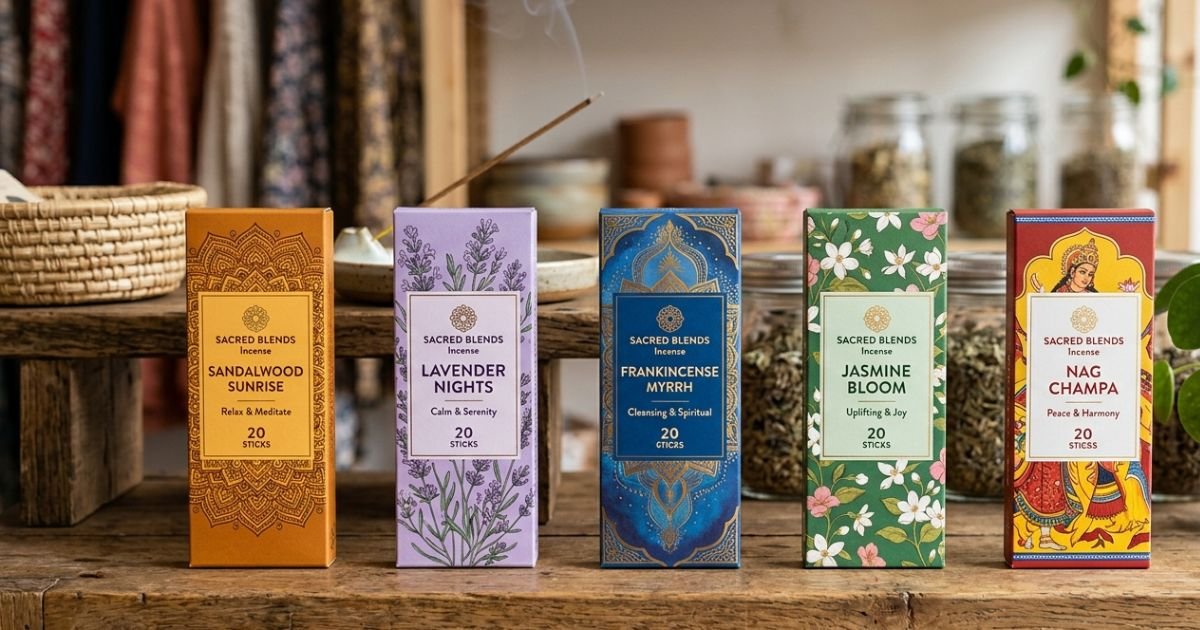
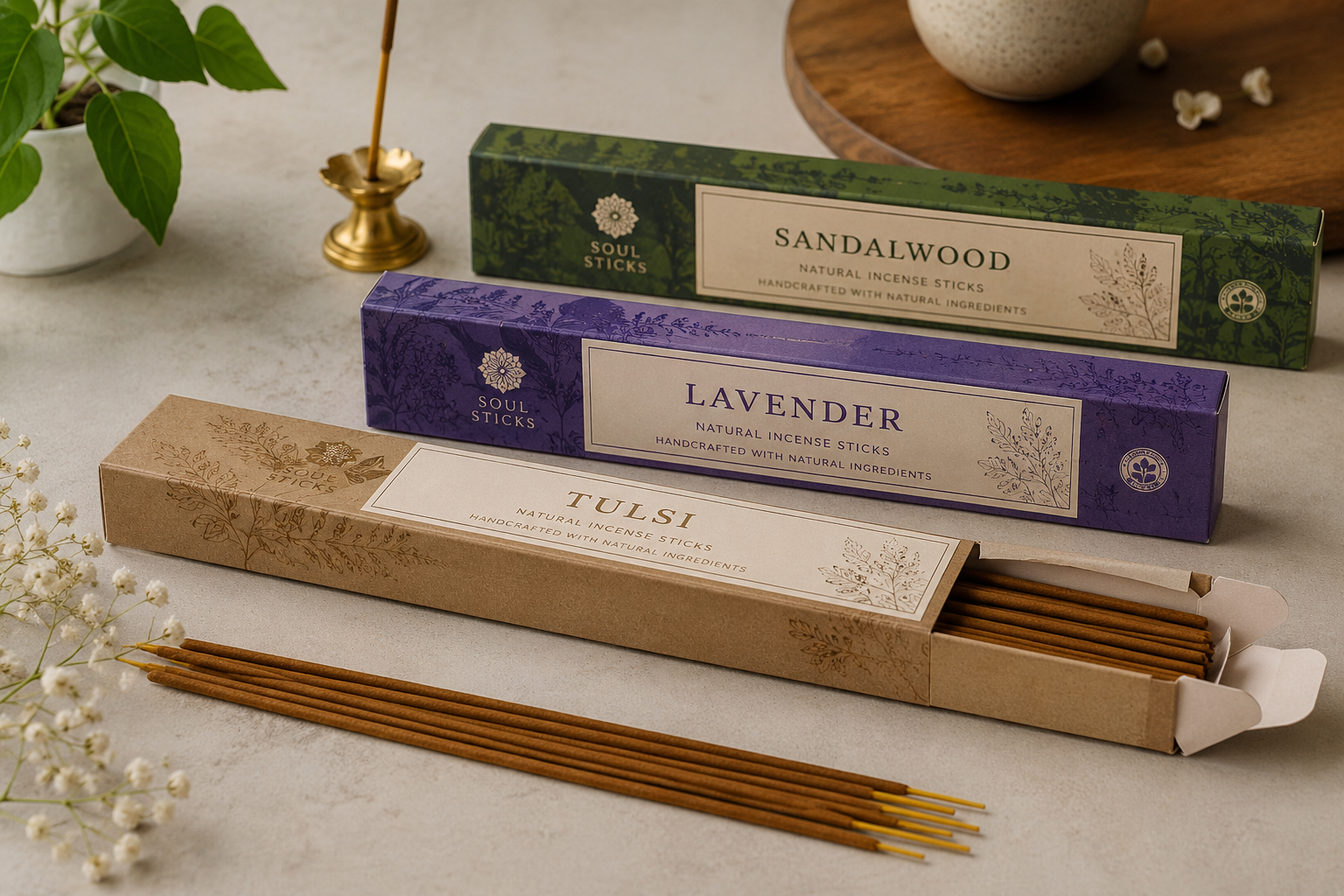
Incense often competes with many similar products in spiritual stores, wellness shops, gift stores and online marketplaces. Packaging gives companies space to develop a consistent identity using color, typography, illustrations and product information.
A brand selling sandalwood incense may use a completely different visual direction from one selling floral or meditation focused products. The packaging should communicate those differences without filling every panel with graphics.
A customer should be able to quickly identify the fragrance, quantity and brand name. Too much information on the front panel can actually make a box harder to read.
Packaging for Different Incense Types
There is no single box structure that works for every incense item.
Incense stick boxes usually have a long rectangular shape that follows the dimensions of the sticks.
Incense cone boxes can be shorter and wider, providing room for cones to sit without excessive stacking.
Resin incense packaging may use small cartons containing an inner container or pouch.
Incense gift boxes can include several fragrances, burners and accessories inside one package.
Custom sizing gives brands more control over these formats. It also reduce the need for excessive filler material inside the carton.
Materials Used for Incense Boxes
Paperboard and Kraft Paper
Solid paperboard is commonly used for retail incense cartons. It provides a smooth printing surface and works with many folding carton structures. Kraft paperboard provides a more natural paper appearance and can suit incense brands that prefer earthy packaging styles.
Corrugated paperboard may be useful for larger sets, wholesale packs and ecommerce shipments where more structural support is needed.
Material selection should consider product weight, printing needs, box size and transportation. Using the thickest material isn’t automatically better. Extra material can increase cost and shipping weight without giving meaningful benefits for a lightweight incense product.
Inserts and Internal Organization
An insert can separate multiple products or hold accessories in one position. Paperboard partitions and molded pulp are paper based options for organizing larger incense sets.
A gift package containing incense sticks and a ceramic holder, for example, should keep the ceramic component away from the fragile sticks. Without separation, movement during delivery could damage both items.
Printing and Branding Options
Product Information
Custom printed incense boxes provide enough space for both branding and practical information. Depending on the product and market, a package may include:
• Brand name and logo
• Fragrance name
• Product quantity
• Burning instructions
• Safety information
• Ingredients or material information
• Barcode
• Company contact details
• Country of origin when applicable
Information should remain readable rather than becoming part of a crowded design. Fonts that look attractive on a computer screen sometimes become very difficult to read after printing at a small size, this is a common issue that should be checked through a physical sample.
Printing Methods and Finishes
Offset printing is suitable for larger production quantities where consistent reproduction is needed. Digital printing can work for smaller orders, samples and brands testing several incense varieties.
Finishes such as matte coating, gloss coating, foil details and spot applications can be used where they fit the design. More finishing does not always create better packaging. Sometimes a straightforward printed carton looks more appropriate for an incense line than a box covered with decorative effects.
Incense Packaging for Ecommerce
Online sales create different packaging demands. A carton that looks good on a retail shelf still needs protection once it goes through fulfillment centers and shipping networks.
The retail incense box may be placed inside a corrugated shipping carton with paper cushioning. Product movement should be kept low, particularly for long incense sticks that can snap when repeatedly shaken.
Shipping tests can reveal problems before customers find them. Brands can test box fit, compression resistance and how products react to normal movement during transportation.
Sustainability and Packaging Choices
Customers are paying more attention to packaging waste. Paperboard gives incense companies several ways to reduce unnecessary packaging material.
Brands can consider recyclable paperboard, responsibly sourced fiber and paper based inserts. Smaller packages may reduce material consumption and shipping volume too.
Claims printed on packaging should accurately describe the materials being used. Terms such as recyclable or recycled content should be supported by the actual package specifications rather than being included just for marketing.
How Custom Incense Boxes Support Brand Growth
Consistent packaging makes a product line easier to recognize. If sandalwood, jasmine, rose and lavender products use the same basic structure with clear color or artwork differences, shoppers can identify individual scents without losing sight of the main brand.
This consistency is useful online too. Product photos look more organized across an ecommerce category page, social media profile or marketplace listing.
Packaging can support repeat purchasing since customers may remember a box color or design long after they have forgotten the exact product name. That visual memory become part of how a company is recognized.
Choosing the Right Incense Box
Before ordering custom incense packaging, measure the actual product rather than relying only on a supplier description. Decide how many pieces will go inside and whether an inner pouch, sleeve or insert is required.
Requesting a sample is useful before ordering thousands of cartons. Check how the package opens, how securely it holds the incense and whether important text remains readable.
The right custom incense boxes balance protection, usable space, printing quality and cost. They don’t need complicated structures to work well. They simply need to fit the product and make sense for the customer.
Frequently Asked Questions
What material is best for custom incense boxes?
Paperboard is a common option for retail incense packaging. Kraft paperboard may suit natural looking designs, and corrugated material can provide more support for larger packs and shipping applications.
Can custom incense boxes protect fragrance?
The outer carton protects against physical contact, dust and some environmental exposure. An inner pouch or wrap may be needed when stronger fragrance retention is required.
What information should be printed on an incense box?
Common information includes the brand, fragrance, quantity, usage directions, safety instructions, barcode and business details. Exact requirements can depend on where the incense is sold.
Can incense packaging be recyclable?
Many paperboard cartons can be recyclable depending on coatings, finishes, adhesives and local recycling facilities. Brands should check the complete material specification before making recycling claims.
Are custom incense boxes suitable for gift sets?
Yes. Larger paperboard or rigid boxes can hold several fragrances, incense holders and related accessories. Inserts can keep different items organized and prevent unnecessary contact during storage or shipping.
Should incense brands order a sample first?
A physical sample is very useful. It lets the brand check dimensions, printing, readability, opening experience and product fit before approving a larger production order.
Share It
Previous Post
Next Post
Recent Posts