Sunflower Drawing Through Art, Printing
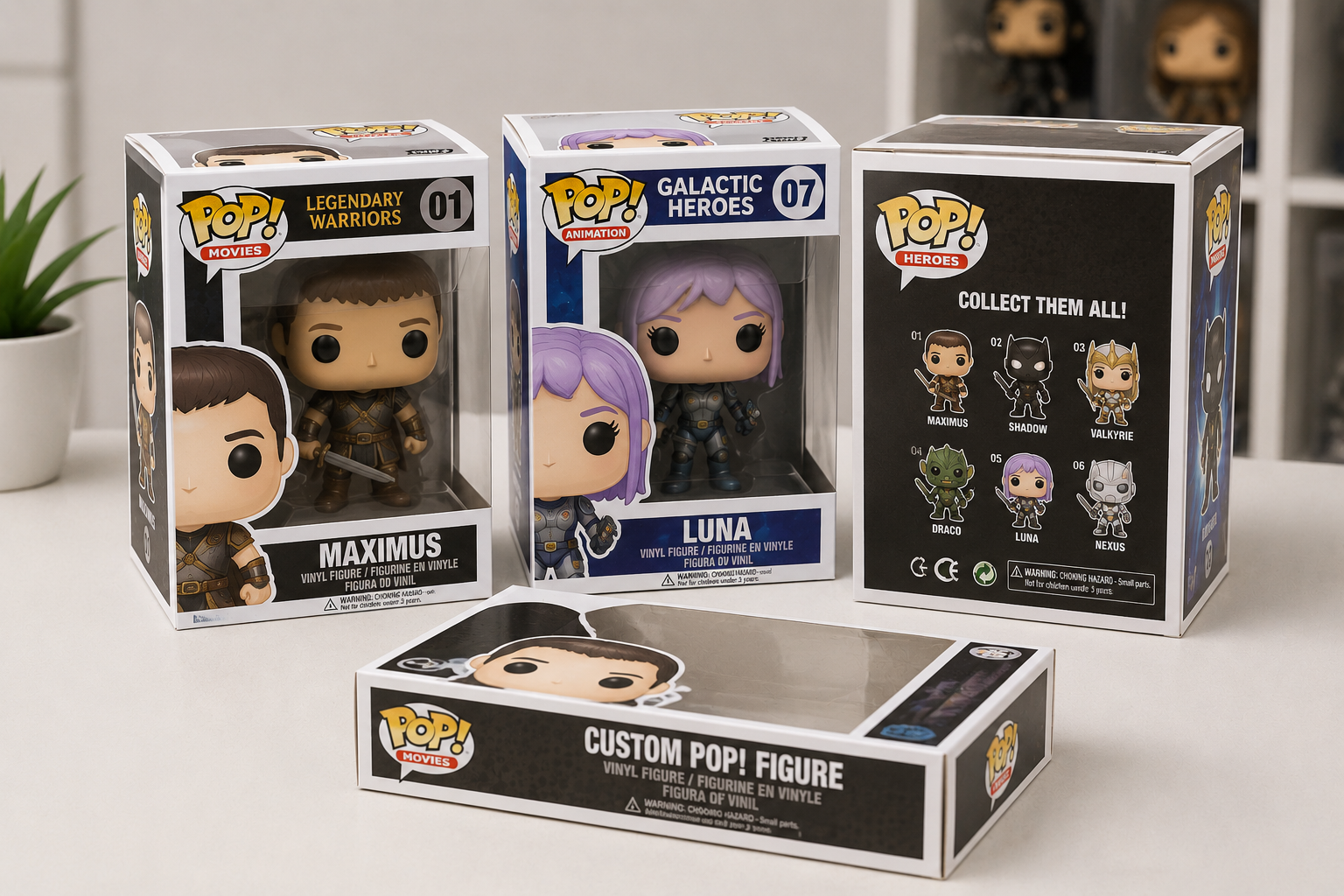
Custom Funko Pop Packaging Boxes for Safe Storage
Arslan Khokhar
June 6, 2026
Collectible figures need packaging that protects the product and still gives buyers a good view of what they are purchasing. Custom Funko Pop packaging boxes can provide protection during storage, retail display and shipping while giving sellers room for product information and branded artwork. The box becomes especially important for collectors since package condition itself can affect how they view a collectible.
Paperboard is a practical material for collectible figure packaging. It provides enough structure for lightweight vinyl figures, accepts detailed printing and can be produced with window openings that show the figure without requiring customers to open the carton.
Why Funko Pop Packaging Needs Proper Protection
Protecting the Collectible Figure
Vinyl figures may look sturdy, but exposed products can collect dust, get scratched or suffer surface damage. Small accessories and thin parts can be more vulnerable during transportation.
A properly fitted carton limits movement around the figure. Internal paperboard inserts or formed trays can keep the collectible in a set position so it does not repeatedly hit the walls of the package.
The packaging should account for:
Figure height and width
Head dimensions
Small accessories
Internal tray dimensions
Window placement
Shipping conditions
Measurements need to be checked with the actual product. A small difference in head size or accessories can result in a package that simply doesnt fit correctly.
Protecting Box Condition
Collectors frequently care about the condition of the packaging itself. Bent corners, crushed panels, scratches and damaged windows can lower the appeal of a boxed collectible.
Using suitable paperboard thickness helps the carton retain its shape during handling. For ecommerce orders, the retail package should usually go inside a separate corrugated shipping carton rather than being used as the shipping container itself.
Custom Funko Pop Boxes for Retail Display
Clear Window Packaging
Window boxes are strongly associated with collectible figure packaging since shoppers want to see the actual item.
A transparent window can cover the front panel and extend onto a side or top panel. This gives customers different viewing angles without opening the carton. The window should have enough surrounding paperboard to keep the structure stable.
The clear film needs to remain properly attached too. Loose edges, scratches or cloudy material can make an otherwise good box look poorly produced.
Shelf Presentation
Retail packaging should communicate the figure identity quickly. Character name, series information, product number and brand elements can be arranged around the viewing window.
Artwork should support the product rather than compete with it. Too many visual elements can make the front panel difficult to scan, especially when several collectible boxes are displayed together.
A consistent package structure makes a full product series look connected on a shelf.
Materials for Collectible Figure Boxes
Folding Paperboard Cartons
Folding paperboard is suitable for many lightweight vinyl collectibles. It can be printed on several panels, die cut for windows and folded into a compact retail carton.
Material thickness should be chosen according to the figure weight and box dimensions. Very thin stock can bend around corners, yet excessive thickness may create unnecessary material cost.
Corrugated Shipping Boxes
Corrugated cartons are better suited for transportation rather than primary retail presentation. Their fluted construction provides greater resistance against impacts and stacking pressure.
A collector ordering one figure online may receive a retail box placed inside a slightly larger corrugated carton with paper cushioning. Multiple figures require enough separation so the retail cartons dont rub against each other throughout delivery.
Printing Custom Funko Pop Packaging Boxes
Brand and Product Information
Printed packaging can communicate product information on every usable panel. The exact content depends on the collectible and licensing arrangement.
Common information can include:
• Character or figure name
• Collection or series name
• Product number
• Age information
• Barcode
• Manufacturer information
• Safety notices
• Artwork and illustrations
• Authenticity details when applicable
The hierarchy of this information matters. A shopper should be able to identify the figure without searching through several panels.
Printing Quality
Digital printing can suit short production quantities, prototypes or limited runs. Offset printing is commonly considered for larger orders where repeatable colors and detailed graphics are needed.
Physical proofs are useful before mass production. Colors viewed on a monitor can look different once printed onto paperboard, and very small lettering might lose readability.
Packaging for Funko Pop Storage
Long Term Collection Storage
Many collectors keep figures inside their original boxes for years. Packaging used for this purpose needs to retain its shape under normal storage conditions.
Boxes should be stored away from excessive humidity, direct sunlight and locations where heavy items could press against them. Clear windows can get scratched during repeated handling, so some collectors use external protectors around valuable packages.
Good storage starts with the carton design itself. Corners need proper folds, glued areas should remain secure and the window should stay attached during normal handling.
Stackability
Collectible boxes are often stored in rows or stacks. Consistent dimensions make organization easier and reduce wasted shelf space.
The bottom panel should remain relatively flat after assembly. Poor folding or an oversized internal tray can cause the carton to bulge, which makes stacking difficult.
Shipping Custom Collectible Boxes
Shipping is one of the biggest challenges for collectible sellers. A figure may leave a warehouse in perfect condition yet reach the buyer with a crushed corner if its outer protection was insufficient.
The retail package should have space around it inside the shipping carton for cushioning. Paper padding can help prevent direct contact with the outer walls.
For higher value figures, sellers may use a protective case around the retail package before placing it into the shipping carton. This adds another barrier against corner and surface damage.
Custom Packaging for Limited Edition Figures
Limited releases and special collections may use different artwork, finishes or box structures to distinguish them from standard products.
Special printing effects can be applied selectively. Foil details, matte coatings and spot finishes are possible options, though they should serve a clear design purpose. Adding every available finish can make packaging look busy and increase production cost very quickly.
Numbered packaging may be useful for genuinely limited product runs. Any limited edition claim should match the actual production details.
Sustainability in Collectible Packaging
Paperboard packaging gives manufacturers options for reducing plastic and unnecessary material. Paper based internal supports can sometimes replace larger plastic trays depending on the figure shape.
Reducing the overall package dimensions can lower paper consumption and may reduce shipping volume. This becomes more meaningful for companies shipping thousands of units.
Environmental claims should accurately reflect the packaging materials. Coatings, windows, adhesives and decorative finishes may affect recyclability in some recycling systems.
Planning Custom Funko Pop Packaging
Start with accurate measurements of the collectible and any included accessories. From there, the internal support and external carton dimensions can be developed.
A physical prototype should be tested before larger production. Put the actual figure inside, close the carton and inspect how much movement occurs. Check the window alignment and see whether the box remains square.
Shipping samples can be tested too. This gives manufacturers a better idea of how the packaging may behave after repeated handling.
Frequently Asked Questions
What material works for Funko Pop packaging boxes?
Paperboard folding cartons work well for primary retail packaging. Corrugated paperboard is more appropriate for outer shipping cartons that need additional structural support.
Can custom collectible boxes include clear windows?
Yes. A die cut opening can be combined with transparent film so buyers can view the figure without opening its packaging.
Are custom Funko Pop boxes good for storage?
A properly constructed box can help protect figures against dust, scratches and routine handling during storage. Storage environment still plays a major role in maintaining package condition.
Should collectible boxes be shipped without an outer carton?
It is usually better to place the retail package inside a separate corrugated shipping carton with suitable cushioning. Shipping directly in the display box increases the risk of damaged corners, panels and windows.
Can packaging be made for different figure sizes?
Yes. Box dimensions, internal supports and window placement can be adjusted according to figure height, width, accessories and product shape.
Share It
Previous Post
Recent Posts