Sunflower Drawing Through Art, Printing
Insulated Packaging Boxes for Safe Shipping
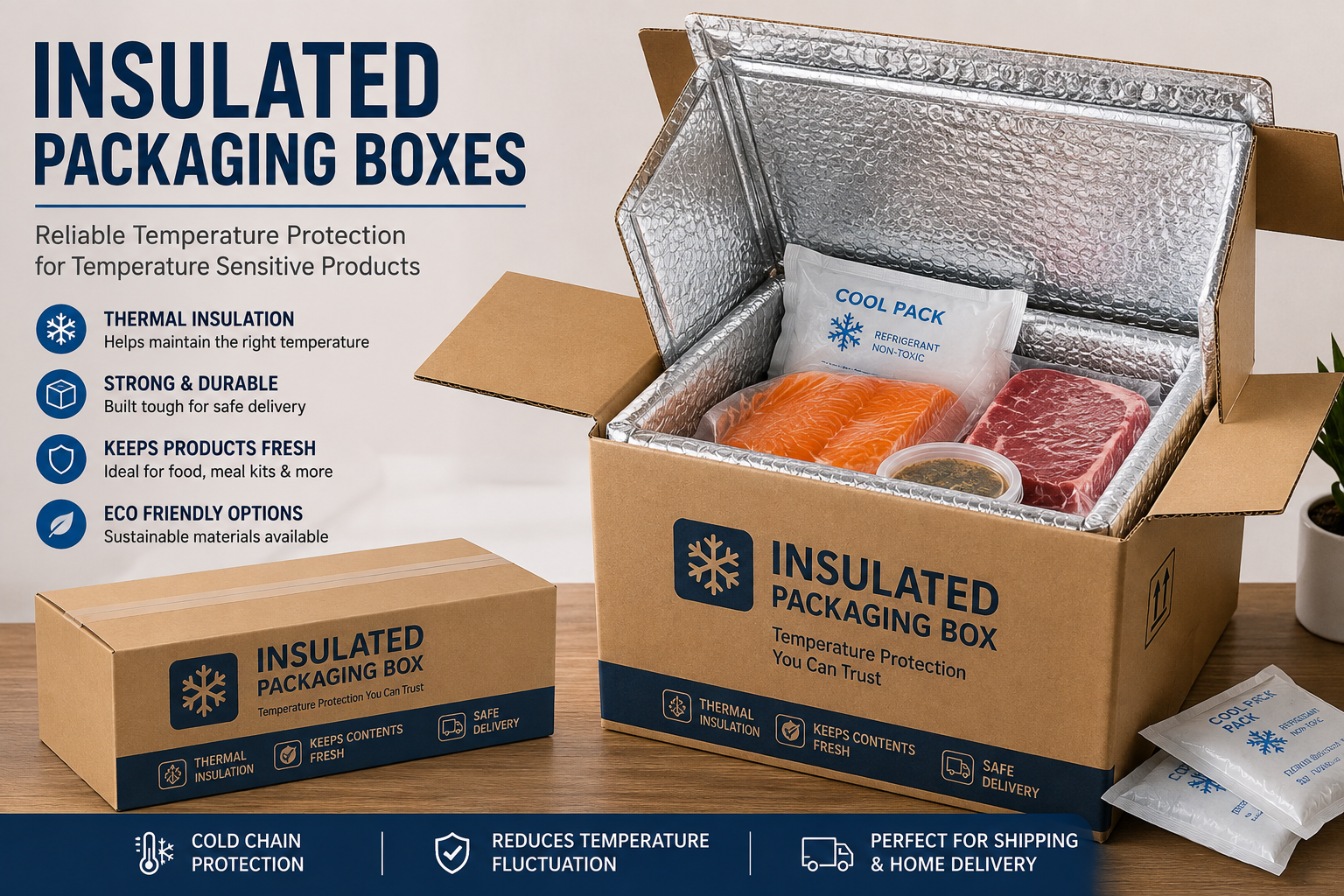
Insulated Packaging Boxes
Arslan Khokhar
June 4, 2026
Products affected by heat or cold need more than an ordinary shipping carton. Insulated packaging boxes combine an outer protective box with thermal insulation to help reduce the effect of outside temperature changes during storage and transportation. They are commonly considered for food, beverages, meal kits, specialty ingredients and other temperature sensitive goods.
A good insulated package starts with the product requirements. Shipping distance, expected outside temperature, product size and required temperature range can all affect the packaging setup. Simply putting an insulated liner inside a large carton does not mean every product will remain at the required temperature for the entire trip.
What Are Insulated Packaging Boxes?
Basic Box Structure
An insulated shipping box usually consists of an outer corrugated carton and an insulating layer placed around the product. Coolants may be added where the shipment needs to remain cold.
The corrugated outer box provides physical protection and gives the package a stable shape. The insulation slows heat transfer between the inside of the package and its surrounding environment.
Common components can include:
• Corrugated paperboard outer carton
• Thermal liner or insulating panels
• Paper based insulation
• Gel packs or other suitable coolants
• Internal dividers
• Absorbent materials when needed
• Shipping labels and handling information
The exact combination depends on what is being shipped.
Insulation Does Not Create Cooling
Insulation and refrigeration are not the same thing. An insulated box helps slow temperature change, but the insulation itself does not automatically make the contents cold.
Products requiring low temperatures may need refrigerated gel packs, frozen packs or another suitable cooling system. The amount and placement of coolant should be established through testing rather than guessing.
How Insulated Boxes Protect Products
Reducing Temperature Changes
During delivery, a package may sit inside warehouses, vans, loading areas and sorting facilities with different temperatures. Insulation creates resistance between the product and those changing external conditions.
The effectiveness of that system depends on insulation thickness, material, box size, internal empty space and shipment duration.
A package traveling for several hours has different requirements than one moving across the country over multiple days. This is why one standard insulated carton wont be right for every shipping program.
Physical Protection
Temperature is only one concern. Products can still be damaged by drops, pressure and movement.
Corrugated outer cartons provide structural protection around the insulated components. Internal dividers can keep containers separated and cushioning can reduce unwanted movement.
Glass bottles, jars and other breakable products need particular attention since thermal protection alone will not prevent impact damage.
Insulated Shipping Boxes for Food
Perishable Food Products
Food businesses may use insulated packaging for meat, seafood, dairy products, desserts, meal kits and other perishable items.
The package needs to support the temperature conditions required by the particular food during transportation. This can involve pre chilling the product, using appropriate coolants and minimizing unnecessary empty space.
Food safety requirements should be treated separately from marketing claims. A package that feels cool when opened has not necessarily maintained the correct conditions throughout transit.
Meal Kit Packaging
Meal kits present an interesting packaging challenge because one box may contain ingredients with different storage needs.
Insulated liners and cold packs are often arranged around ingredients requiring lower temperatures. Dry ingredients may be separated from cold products to reduce condensation contact and make unpacking easier.
Packaging designers need to consider both temperature and customer experience here. A customer should be able to understand which ingredients require immediate refrigeration after opening the box.
Insulated Boxes for Other Products
Temperature Sensitive Goods
Insulated cartons may be considered for products that can be affected by large temperature changes during delivery.
Certain cosmetics, specialty foods, chocolates, laboratory materials and similar goods can require some degree of thermal protection depending on their formulation and shipping conditions.
Packaging requirements should come from the actual product specifications. One should not assume that a system used for chocolate will perform the same way for another temperature sensitive product.
Pharmaceutical Shipping
Some pharmaceutical and healthcare shipments have strict temperature requirements. Packaging used for these applications needs to be developed and validated according to the particular product, distribution process and applicable requirements.
A standard insulated ecommerce box should not automatically be treated as suitable for regulated pharmaceutical shipments.
Testing and temperature monitoring may be required for these applications.
Materials Used in Insulated Packaging
Corrugated Paperboard
Corrugated paperboard commonly forms the external shipping carton. Its fluted structure gives the package support against stacking and routine transportation impacts.
The board grade should match the package weight and distribution conditions. Larger shipments containing coolant packs can become surprisingly heavy, so carton strength need to account for the complete packed weight rather than the product alone.
Thermal Liners and Inserts
Thermal liners create an insulating barrier inside the outer carton. Different liner structures provide different levels of thermal resistance.
Some systems use flexible liners that fold around the contents. Others use rigid panels positioned against each wall of the shipping carton.
Paper based insulation is another option for brands looking to reduce certain plastic components. Performance still needs testing since material choice should be based on actual thermal requirements.
Proper Sizing for Insulated Boxes
Avoid Excessive Empty Space
Oversized packaging can reduce efficiency. More empty air may require additional insulation, cushioning or coolant.
A properly sized box places the product, insulation and coolant into a planned configuration. This makes packing more consistent and can reduce unnecessary packaging material.
The box should not be made too tight either. Compressing coolant packs or damaging insulation can affect package performance.
Coolant Placement
Cold packs need to be positioned according to how the package was tested. Placing every coolant pack at the bottom just because it fits there may produce uneven cooling.
The arrangement may include coolant above, below or around the product depending on the required performance.
Packing instructions should remain consistent across warehouse teams so tested configurations are reproduced correctly.
Testing Insulated Packaging
Temperature Testing
Testing is a very important part of developing an insulated shipping system.
Temperature sensors can be placed at relevant locations inside a test shipment. The package can then be exposed to conditions that represent the expected distribution environment.
Results can show how long the required temperature range was maintained and where weaknesses exist.
Shipping Tests
Thermal performance isn’t the only thing worth testing. Boxes should be checked for compression, impacts and handling too.
A package might perform well thermally but arrive with crushed corners. Another may survive handling but fail to maintain the desired internal conditions.
Both sides of packaging performance need attention.
Sustainable Insulated Packaging Choices
Insulated shipping systems can use a considerable amount of material, particularly for recurring food deliveries.
Right sizing is one way to reduce waste. Paper based insulation and recyclable corrugated cartons may provide other options depending on the required performance.
Brands should check how every packaging component is disposed of. An outer carton may be recyclable while a liner, coolant pouch or other component requires separate disposal.
Simple disposal instructions printed inside the carton can help customers sort these materials correctly.
Custom Printing and Branding
Insulated packaging does not need to look completely industrial.
The corrugated outer carton provides space for company branding, handling instructions, storage directions and customer information. Printing can remain fairly simple for a shipping package.
Inside printing may include unpacking instructions or information explaining how to dispose of packaging components.
Temperature related instructions should be easy to locate rather than hidden under decorative graphics.
Frequently Asked Questions
What is an insulated packaging box?
It is a shipping package that combines an outer carton with insulating materials that help slow heat transfer between the product and outside environment.
Do insulated boxes keep products cold?
Insulation slows temperature change. Products requiring cold conditions may need suitable coolant such as gel packs along with the insulation.
What products use insulated shipping boxes?
Food, meal kits, beverages, chocolates and other temperature sensitive products may use insulated packaging. Some healthcare products use specialized temperature controlled shipping systems with stricter requirements.
Are insulated packaging boxes recyclable?
The corrugated outer carton is often recyclable where facilities accept it. Liners, coolant packs and other components may have different disposal requirements depending on their materials.
How long does an insulated box stay cold?
There is no single time that applies to every insulated package. Box dimensions, insulation, coolant quantity, product temperature, external conditions and transit duration all affect performance.
Should insulated packaging be tested before shipping?
Yes. Testing the complete packed configuration helps determine whether it can maintain the required conditions during the expected shipping period.
Share It
Previous Post
Recent Posts