Sunflower Drawing Through Art, Printing
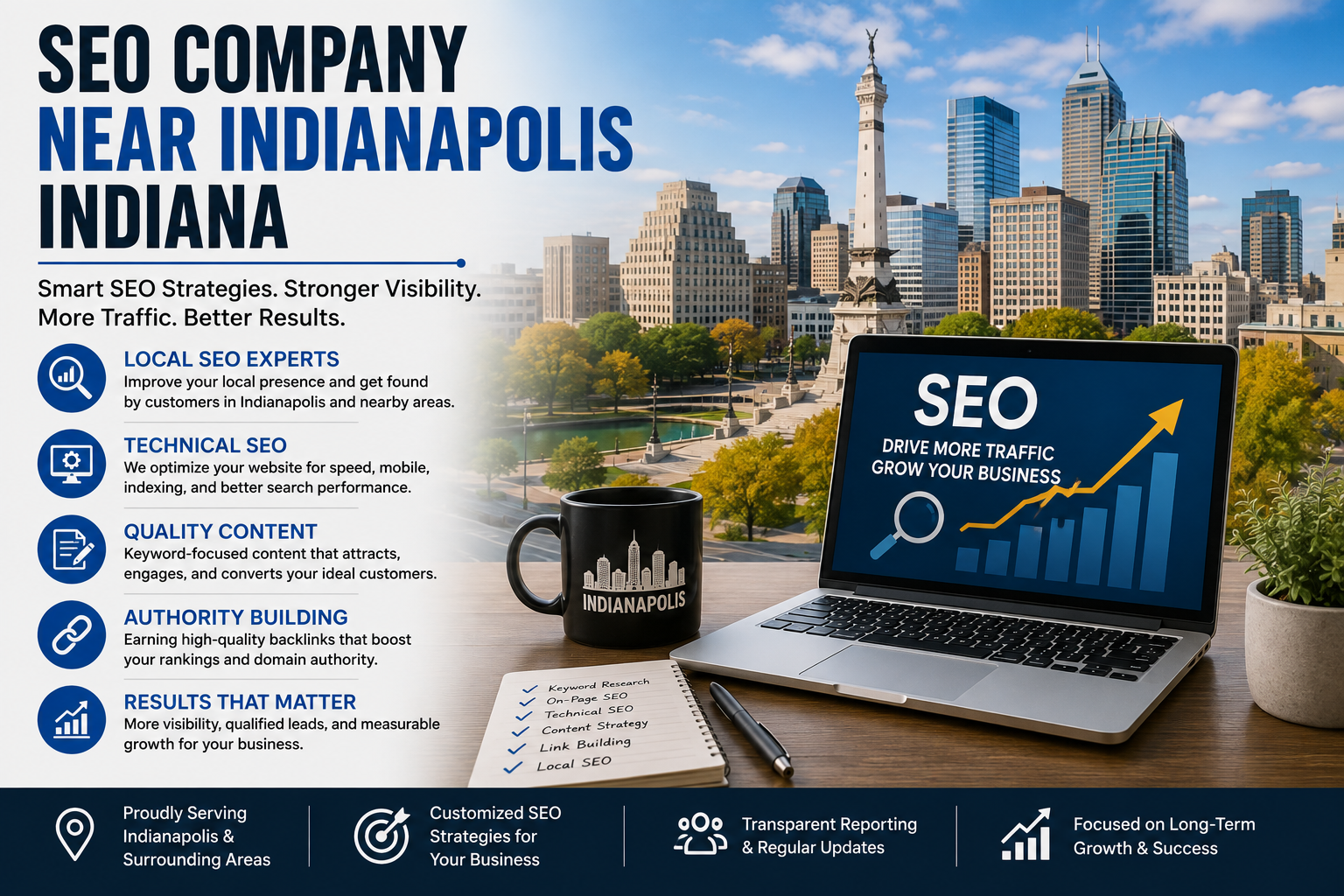
SEO Company Near Indianapolis Indiana for Local Business
Arslan Khokhar
May 18, 2026
Finding an SEO company near Indianapolis Indiana can help a business improve how its website appears when potential customers search for products and services online. Search engine optimization involves much more than placing keywords onto a few pages. Technical website health, useful content, local relevance, page structure, links and business information can all affect organic search performance.
Indianapolis businesses compete across many industries, from home services and professional firms to healthcare, retail, automotive companies and restaurants. A local SEO plan should reflect what customers actually search for and which services generate meaningful inquiries.
The goal should not just be more website traffic. The better goal is attracting visitors who have a genuine reason to contact, visit or buy from the business.
What Does an Indianapolis SEO Company Do?
Website SEO Audit
An SEO campaign usually begins with an audit.
The audit looks for problems that may limit search visibility or make a website difficult for visitors to use. A site can look really good from the front while technical problems are sitting underneath it.
Common areas reviewed include:
• Search engine indexing
• Page titles and descriptions
• Internal links
• Duplicate pages
• Broken links
• Redirects
• Canonical URLs
• Mobile usability
• Page performance
• Structured data
• XML sitemap configuration
An audit should lead to actual fixes. Sending a business owner a long report without explaining what needs to be done doesn’t provide much value.
Keyword Research
Keyword research identifies how potential customers describe the services they need.
An Indianapolis HVAC contractor, attorney and dentist should obviously not target the same searches. Even two companies within one industry can require different keyword plans based on services, location and customer type.
Keyword selection should consider search intent instead of search volume alone.
Local SEO Services in Indianapolis
Google Business Profile Optimization
For businesses serving customers locally, Google Business Profile can be an important part of search visibility.
Business categories, contact information, operating details, website connections, photos and other profile information should accurately represent the company.
Businesses should avoid creating misleading locations simply to appear in additional areas. Accurate business information gives search engines and potential customers a clearer picture of who the company is and where it operates.
Local Search Visibility
Someone searching “roof repair Indianapolis” has a different intent from someone searching “how long does a roof last.”
The first query suggests a person may be looking for a local provider. An SEO strategy should identify these commercially useful searches and connect them with the right service pages.
Location relevance can be developed through useful service information, accurate business details and pages that genuinely help customers in the areas a company serves.
On Page SEO for Indianapolis Businesses
Titles and Page Content
Every important page should have a clear purpose.
A plumbing company may need individual pages for water heater repair, drain services, leak repair and other major services instead of forcing every topic onto one general plumbing page.
Page titles and headings should describe the subject naturally. Repeating “Indianapolis Indiana” in every paragraph can make content awkward and doesn’t automatically improve rankings.
Good content answers the questions a potential customer needs answered before making contact.
Internal Linking
Internal links connect related pages within a website.
A main HVAC services page, for example, can link to AC repair, furnace repair and maintenance pages. Those pages can link back to the main service section where useful.
This creates clearer relationships between content and helps visitors move around the website.
Internal linking is simple in theory but many business websites barely use it.
Technical SEO Services
Indexing and Crawlability
A page cannot generate much organic search traffic if search engines cannot properly access or index it.
Technical SEO checks whether important pages can be crawled and whether unwanted pages are creating unnecessary duplication.
Robots directives, canonical tags, redirects and sitemap configuration need to work together. A mistake here sometimes affects hundreds of URLs at once.
Website Performance
Slow websites can frustrate visitors, particularly on mobile devices.
Large images, excessive scripts, poorly configured plugins and inefficient page builders can increase loading time.
Performance work should focus on practical improvements without breaking the appearance or functionality of the website. Sometimes it gets complicated, especially on older WordPress sites with years of plugins added by different people.
SEO Content Strategy
Service Pages
Service pages should explain what the company provides, who the service is for and what a customer can expect.
Thin pages containing nearly identical paragraphs with different city names provide little useful information.
A stronger page can discuss the service itself, common customer problems, process, relevant local considerations and frequently asked questions.
Informational Content
Blog content can reach people earlier in their decision process.
A roofing company could answer questions about roof damage, materials and maintenance. An attorney could explain common legal processes. A home service company might publish troubleshooting information.
These articles can support commercial pages through relevant internal links.
Indianapolis and Nearby Area SEO
Businesses near Indianapolis may serve customers across multiple communities rather than within one small geographic area.
A company might operate across Indianapolis and surrounding communities, but that does not mean it needs hundreds of nearly identical location pages.
Location pages make more sense where the business genuinely provides the service and has useful information to offer people searching from that area.
The website structure should remain manageable as more locations are added.
Link Building and Business Authority
Relevant Backlinks
Links from other websites can contribute to organic search visibility, but link quality matters more than simply collecting a large number.
Industry publications, local organizations, business partners and relevant websites can provide useful opportunities.
Buying hundreds of unrelated links just to increase a backlink count can create a messy link profile and very little actual business value.
Local Citations
Business information can appear across directories and other online platforms.
Core details such as business name, address where applicable, phone number and website should be accurate. Incorrect listings can confuse customers, and fixing them is usually easier than letting inconsistent information accumulate for years.
Measuring SEO Results
Search Console and Analytics
SEO work should be measured.
Google Search Console can help website owners review search queries, impressions, clicks, indexing and page performance in Google Search.
Analytics can provide another view of how visitors interact with the website.
Rankings are useful, but they are not the only measurement that matters.
Leads and Business Results
A campaign that increases traffic but generates no useful inquiries needs further investigation.
Businesses should monitor outcomes such as:
Organic search clicks
Qualified contact form submissions
Phone inquiries
Important page performance
Local search visibility
Conversion activity
Revenue or qualified leads where tracking permits
This connects SEO work with actual business performance instead of reporting rankings by themselves.
Choosing an SEO Company Near Indianapolis Indiana
Before hiring an SEO company, ask what work will actually be performed.
A good proposal should explain technical SEO, content, local optimization and reporting rather than promising a number one ranking.
Ask who will make website changes too. Some agencies provide recommendations but leave every implementation task to the client.
For a business without an internal web team, hands on implementation may be more useful.
You should also ask how results are measured and how often work is reported. SEO takes time, but that doesn’t mean the process should be invisible.
Why Local Knowledge Matters
Indianapolis businesses can serve customers across different neighborhoods and surrounding communities. Search behavior may vary according to the service and customer location.
Local SEO needs to connect geographic relevance with actual business operations.
Creating fake offices or stuffing city names into content is not a replacement for this. A better strategy builds useful service pages, maintains accurate business information and develops genuine local relevance over time.
Frequently Asked Questions
What does an SEO company near Indianapolis Indiana provide?
Services may include technical SEO, keyword research, local SEO, Google Business Profile work, content optimization, internal linking, link building and performance reporting.
How long does SEO take?
There is no fixed timeline. Website condition, competition, existing authority, content and the keywords being targeted can affect how quickly meaningful changes appear.
Is local SEO different from regular SEO?
Local SEO places more attention on geographically relevant searches, business information and local visibility. Traditional organic SEO can target broader informational and commercial searches.
Does my Indianapolis business need location pages?
Possibly. Location pages can make sense when a company genuinely serves several areas and can provide useful location specific information. Creating hundreds of nearly identical pages is not a good substitute for useful content.
Can SEO guarantee first place on Google?
No responsible SEO company can guarantee a permanent number one organic ranking. Search results change and competitors are working on their sites too.
How should I measure an SEO campaign?
Track search visibility and traffic, but pay close attention to qualified leads, calls, forms and other actions connected with business goals.
Share It
Previous Post
Recent Posts